Friday, January 30, 2009

Northern Lights Moonrise over Wauswaugoning Bay


Well, the aurora made a pretty good showing last night! It sounds like most everyone had cloudy skies but lucky for me the clouds didn't move in up here until after the aurora faded. The lights put on a pretty good show from about 11:00 p.m. to 12:00 a.m. Here are my favorite images from last night!


Thursday, January 29, 2009

Fork vs Frame

Fork vs Frame

At the D2R2 last weekend I met a cyclist who was riding a hastily assembled spare bike, after breaking the fork on his custom randonneur just before the event. Riding off road, he'd hit a log at full speed and the forkcracked from the impact, right at the Grand Bois crown. However, the frame and front wheel appear undamaged.


Fork vs Frame


His experience reminded me of a conversation about fork vs frame strength the guys at Circle A Cycles were having when I visited them a week earlier. They brought out an older racing frameset that had suffered a similar impact as the D2R2 rider's bike. However, in this case the fork was fine while the front triangle of the frame had buckled from the impact.


Fork vs Frame

Apparently, when a particular stye of Cinelli sloping fork crown came out in the 1980s with its corresponding straight, short fork blades, some framebuilders complained that the resulting forks were too strong - causing frames to suffer damage on impact. A less rigid fork would be able to absorb the impact and save the frame. And it is easier to make a new fork than a new frame.


Fork vs Frame

I just thought all of this was interesting, because the relative strength of the frame vs fork is something that even framebuilders don't always think about. But these dynamics are worth considering. A super-lightweigth steel frame paired with a super-rigid, strong fork may not necessarily be a great idea. The Circle A customer will be getting their frame rebuilt around the intact rear triangle. The D2R2 rider will most likely be getting a new fork made. I am curious and will follow up on both framesets.

Tuesday, January 27, 2009

Colors of Fall


We don't get many colorful fall leaves here at the house, but with a little gardening know-how we have fall flowers that are lovely. The first 2 photos are the wild purple asters that take no care at all. Next are a few photos of different marigolds.


I had zennias in all kinds of colors this year.


A yellow rose and a blanket flower daisy.


Morning Glories are one of my favorite flowers as they are so easy to grow and vine nicely over things that don't look so good. Once started they re-seed yearly by theirselves with just a bit of water here. Where it rains more you usually don't need to water them. In fact to much water and they don't bloom, just making the nice vine.


And the wild sunflowers that are so prolific here.


Summer Storm over Swamp Lake


Check out these awesome clouds that I photographed over Swamp Lake today.

Saturday, January 24, 2009

In The Shadow of Giants


These huge redwoods are awe-inspiring.

Guess what else


I have no willpower whatsoever.

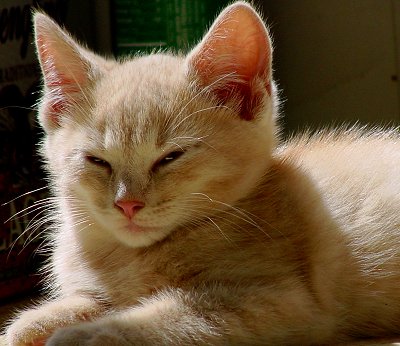
They are all females, I think. The yellow one and the calico from yesterday are siblings. The other one is a little older and is very mischievous.

Still no names for any of them yet. (More suggestions welcome.)

Jasmine has met the bigger one. She seemed interested, but the kitten was not impressed. (Hiss, spit, hiss.)

Friday, January 23, 2009

Bosque del Apache


From the "Friends of the Bosque" website (http://www.friendsofthebosque.org/):

"The Bosque del Apache National Wildlife Refuge in New Mexico is an important wintering home for Sandhill Cranes and hosts as many as 14,000 cranes during the winter months. The Bosque is located along the Rio Grande River south of Albuquerque and provides critical habitat for cranes and other migratory birds such as over 32,000 Snow Geese, dozens of Bald Eagles, Avocets and many other birds. The beautiful refuge is also home to small herds of Mule Deer and families of Coyotes. Seeing the sunset "fly-in" and the sunrise "fly-out" is an experience you will never forget!"


Above: "Blue morning at Bosque" - An overcast, snowy, predawn morning makes for a dramatic image of these Sandhill Cranes.

After leaving Yosemite the next stop on my trip was to be Bosque del Apache in New Mexico. The plan was to meet back up with my friend Roger (http:www.rogernordstromphoto.com) in Socorro then head to the refuge the next morning. For those of you that have been following along with my blog, Roger and I started off my trip together with a visit to the Badlands and Black Hills of South Dakota. After that portion of the trip Roger had to head back home, but I continued on my journey and here we are meeting back up again near the end of my trip! Roger was visiting his family in California for Christmas, so he stopped in New Mexico to meet up with me on his way back home.

I arrived in Socorro with enough time to head to the refuge for sunset (Roger wouldn't be arriving for several more hours). Not long after arriving at the refuge I was a little disappointed at the lack of birds. I had visited Bosque back in 2004 during this same week, and remembered seeing LOTS of cranes, and LOTS of snow geese. This time, there were only a few. Oh well, I figured... maybe it was just an "off" night, and more would be around tomorrow.


Above: "Red-Winged Rush" - While driving the roads of the refuge, we spotted this large group of Red-Winged Blackbirds that was flying around one of the fields... they would fly around a bit, then land for a moment, then fly around again. I've never seen so many Red-Winged Blackbirds at one time before. Luckily I had my camera and telephoto lens ready to capture this rush of birds!

The next morning we rose bright and early so we could take advantage of the nice breakfast that was offered at our motel. If you're ever looking for a place to stay in Socorro, I highly recommend the EconoLodge... VERY reasonable rate, the room was spacious and very comfortable, the staff was friendly and they had one of the best breakfasts of any motel I've ever stayed in. Coffee, juice, bagels, waffles, cereal, fresh fruit.... it was a great way to start the day!


Above: "Coyotes on the prowl" - A pair of coyotes working their way along the edge of one of the fields. There was a group of snow geese out in the middle of this field, several hundred yards away from these coyotes. The coyotes had their eyes on the birds... not sure if they got any or not, as they ducked into the brush and I never saw them again.


Above: "Safe Zone" - A group of Canada Geese along with a few Sandhill Cranes rests in a field. The fields provide food and a modicum of protection from coyotes, their main predator at the refuge. The birds are usually clustered in the middle of these fields, so they can see the coyotes coming in time to take off and avoid being caught by one.

After breakfast we hit the road for the refuge, which is about a 25 minute drive from Socorro. It started snowing not long after we got on the freeway. Hmmmm.... probably not going to be much of a sunrise, we thought. We were right about that... no sunrise, it was too cloudy. The snow kept coming down, and at times quite heavily. It ended up being a wonderful morning, with the fresh snow providing a perspective on the refuge that not many people are able to enjoy. Being that this is a desert, they don't get much rain or snow. It was a rare treat. Throughout the morning we saw many small groups of birds but as the day progressed we would see more and more. We spent several days at the refuge, and by the time we left we were quite happy with the birds we had seen.


Above and below: These cranes were out for a morning walk on one of the frozen ponds. After watching them for about a half hour, they began to take off one by one from the ice.


Bosque del Apache was my first exposure to Sandhill Cranes and Snow Geese. Before my visit in late 2004, I had never seen either of these birds. Since then, I have been to Nebraska several times to witness the massive gathering that occurs there every spring. Sandhill Cranes are amazing birds, and I don't think I will ever tire of seeing them. Sandhill Cranes have one of the longest fossil histories of any existing bird. The oldest Sandhill Crane fossil is about 2.5 million years old, over one and a half times older than the earliest remains of most living species of birds!

If you'd like to see some more images of Sandhill Cranes, please visit my blog entries from Nebraska in March of :

http://travisnovitsky.blogspot.com//04/sandhill-cranes-on-platte-river.html

and from March of :

http://travisnovitsky.blogspot.com//03/gathering-on-platte-river.html


Above and below: Experimenting with some slower shutter speeds, trying to "blur" the wings of snow geese as they flew into the refuge at sunset.


Above: Two cranes out for an evening walk.


Above: "Flight Training" - This trio of snow geese flew over us several times as they looped around the farm deck field. Most of the time it seemed as though the two geese behind were chasing the one in the front. I joked with my friend Roger that the one in front was probably the "flight instructor", and was teaching the two behind him how to follow and stay in formation :-)


Above: A typical "blast-off" of Snow Geese at the refuge. When the geese fly out from the refuge, they usually do so in one large group. When an entire field full of these birds decides to take flight all at the same time, it is quite a sight to see. Its also really something to hear the birds when they all take flight. The whole experience is unforgettable. To see a short video of one of the morning "blast-off" events, click this link to my main website:

http://www.travisnovitsky.com/Video-Clips/Misc-Videos/4207197_KrddQ/1/756102917_Wdjg4/Medium

Below: Sunset over one of the irrigation canals at the refuge (the two lights are the headlights of a vehicle approaching on one of the refuge roads). The staff at the refuge use these canals to divert water from the Rio Grande into the fields at the refuge, creating prime habitat for the birds. If you're into wildlife, you should put a visit to Bosque del Apache at the top of your list!

Thursday, January 22, 2009

Jumbo Rocks

In the northern portion of Joshua Tree National Park is an area known for its unique rock formations. It is a fascinating and fun area to explore. There were quite a few people bouldering and rock climbing, but I wasn't one of them! Although I did walk on a few of rocks, I'm just not adept or flexible enough to do the tough stuff. I'll leave that to the younger crowd and to those that know what they are doing!